
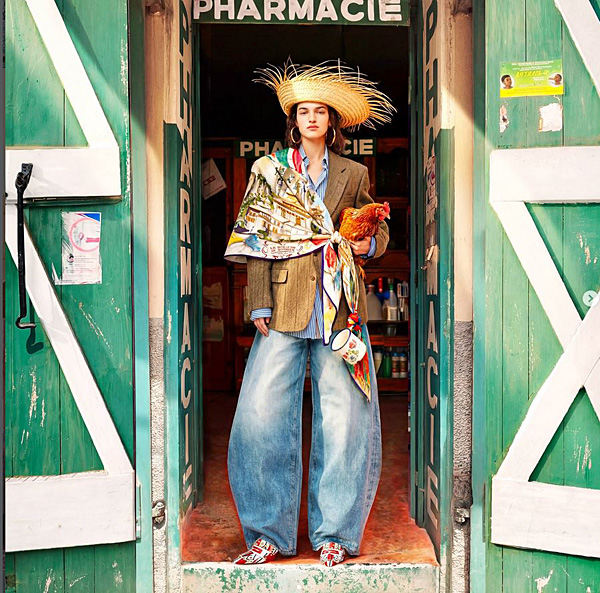
A design by Stella Jean features a silk scarf from her new scarf collection, Instagram
A shared love of soccer unified billions, but the World Cup’s true cultural impact is its massive global opportunity for cross-cultural exchange. Fans are encouraged to celebrate their differences, share human experiences, and foster cultural humility by challenging stereotypes.
When cultures merge, clothing becomes a medium for cultural dialogue and a way for wearers to celebrate heritage, community affiliation, and evolving global identities. Beyond streetwear, “arrival fashion” has turned airport tarmacs into runways for cultural expression.
“I desired to change the image and perception of my country through my art, to showcase and promote Congolese culture [and] artisanal skills.” – Alvin Mak, the Paris-based Congolese designer who created the leopard-embellished suits and leopard bags worn by the Congolese national team for its arrival in Houston.
Fashion helps us find beauty in other cultures by serving as a wearable, visual language. Because clothing transcends simple utility, it acts as a bridge for cultural diplomacy, allowing us to appreciate the craftsmanship, history, and values of a society without needing words.
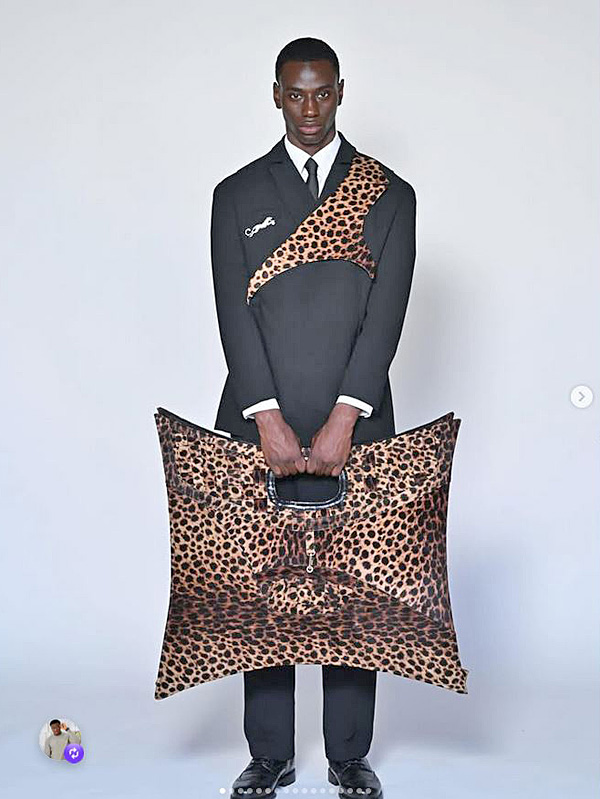
DR Congo national soccer team outfit designed by Alvin J Mak, photo by JmakxParis
The Democratic Republic of Congo (DR Congo) national soccer team, nicknamed “Les Léopards,” made headlines by arriving in Houston, Texas, for the 2026 FIFA World Cup wearing custom leopard-print suits. The team did not win the World Cup, but they won the World Cup of Fashion!
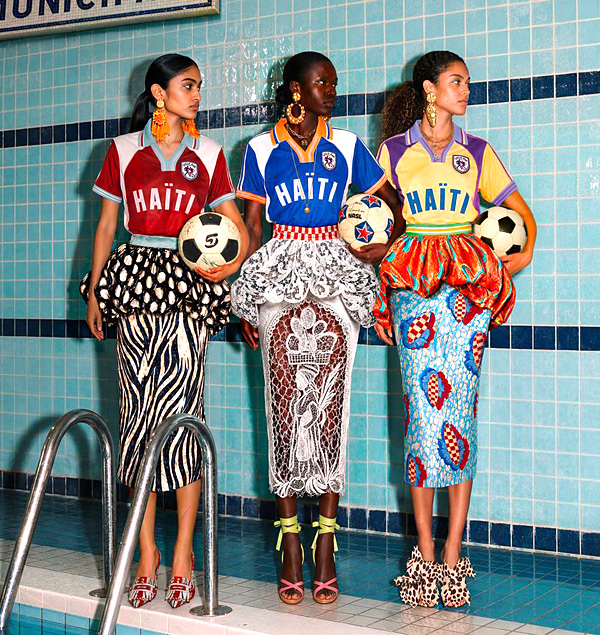
To celebrate Haiti’s return to the World Cup after 52 years, Italian-Haitian designer Stella Jean launched the “L’Haitiana” collection, shop-stellajean.com
To celebrate Haiti’s historic return to the FIFA World Cup after 52 years, Italian-Haitian designer Stella Jean launched the “L’Haitiana” collection. This capsule reimagines the Haitian national soccer jersey as luxury streetwear, featuring vibrant polo jerseys, T-shirts, and contemporary silhouettes.
The collection blends Caribbean identity with athletic utility, incorporating the number 26 in honor of the 2026 World Cup. These pieces are more than sportswear; they support educational initiatives in Haiti through the nonprofit Prodev Foundation.
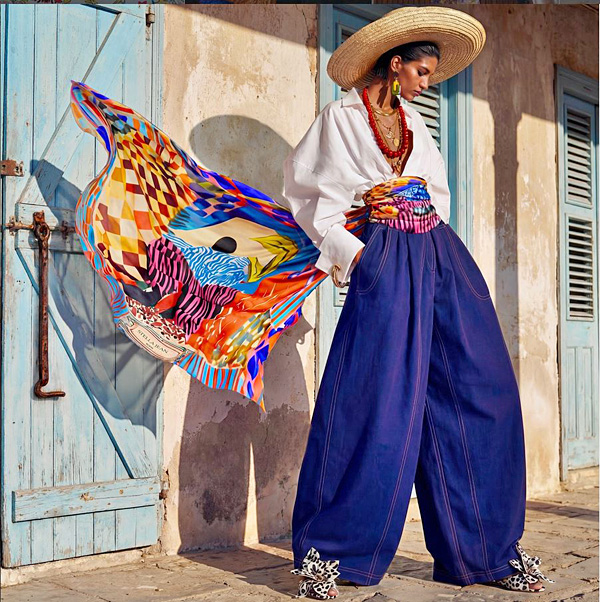
A Stella Jean design featuring a scarf from her new silk scarf capsule collection, photo stellajean.it
I have always admired Stella Jean’s work and her ability to blend classic Italian tailoring with vibrant, multicultural aesthetics. Moreover, Stella is a vocal advocate for ethical fashion and diversity, widely known as the first Black Afro-descendant member of the prestigious Italian Fashion Chamber (Camera Nazionale della Moda Italiana).
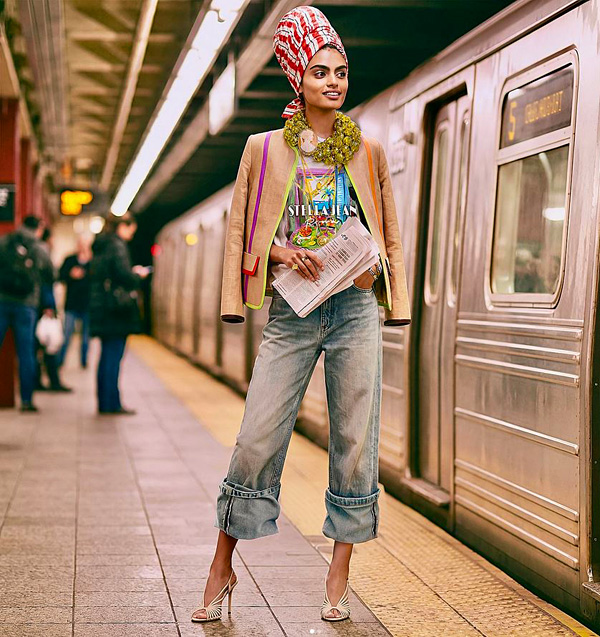
The jacket from resort 2026, made of recycled coffee sacks, was first shown in 2013, photo on Instagram
Among the standouts from recent Stella Jean collections are a jacket made of recycled coffee sacks from the resort 2026 collection that was first shown on the 2013 runway, a hand-painted and embroidered structured bodice made of repurposed material, and an organic jute piece that is hand-painted and embroidered.
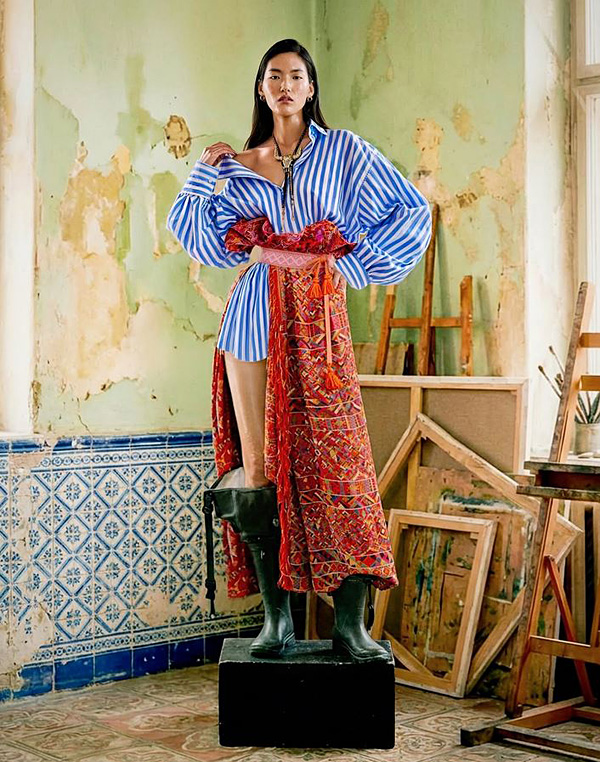
Stella Jean hand-woven Bhutanese skirt, photo by stellajean.it
Stella, who created the striking, hand-painted opening ceremony uniforms for Haiti’s delegation at the Milano Cortina 2026 Winter Olympics, recently launched a signature silk scarf collection known as Étendards de Soie (Silk Standards). It is the designer’s first curated line of silk foulards. The collection acts as “cartography, tracing a tapestry of nations,” entirely crafted in Italy.
Cross-cultural influences are the lifeblood of fashion. By fusing different textile techniques, silhouettes, and historical narratives, the industry breaks geographical barriers to create fresh, hybrid aesthetics that reflect our increasingly interconnected global society.
Designers constantly borrow from traditional craftsmanship- such as African prints, Japanese kimono cuts, or Indian embroidery- to invent modern silhouettes. Without this exchange, trends would quickly become repetitive and lack depth. By pulling inspiration from distant geographies, historical eras, or subcultures, designers and wearers transform clothing into a narrative tool that breaks free from everyday monotony. Think of it as a psychological vacation.
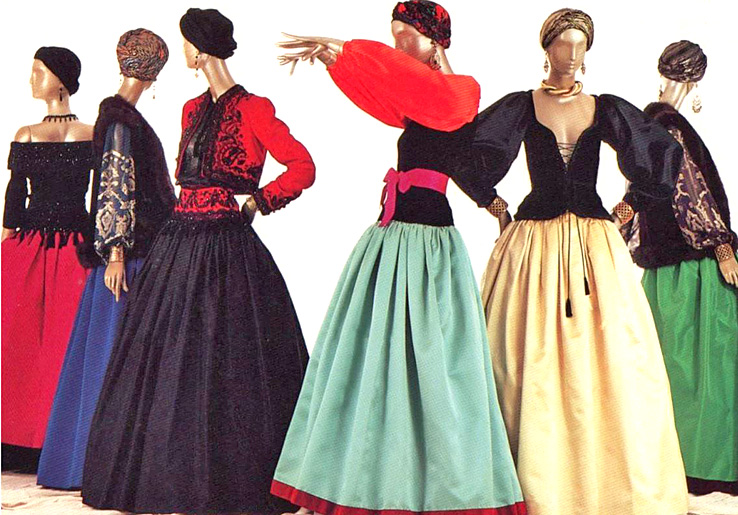
YSL 1976 Ballet Russes Collection, photo YSL
In the 1960’s and 70s, Yves Saint Laurent revolutionized high fashion by frequently drawing inspiration from global, multicultural, and indigenous aesthetics. His most famous ethnically and culturally inspired collections masterfully blended traditional folkloric techniques—such as raffia beadwork, elaborate patchwork, and traditional silk brocades—with modern Parisian haute couture.
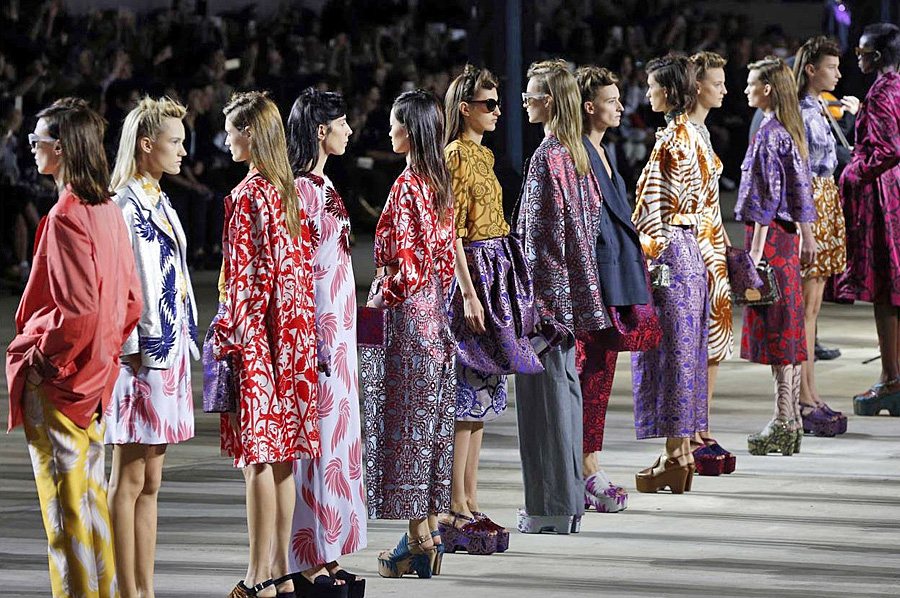
Dries Van Noten, Getty Images
Ethnic touches and global folklore are foundational to the aesthetic of Dries Van Noten. Rather than directly appropriating a single traditional aesthetic, Dries Van Noten wove diverse cultural elements—like African beadwork, Indian embroidery, Japanese kimonos, and Indonesian batiks—together with Western tailoring.
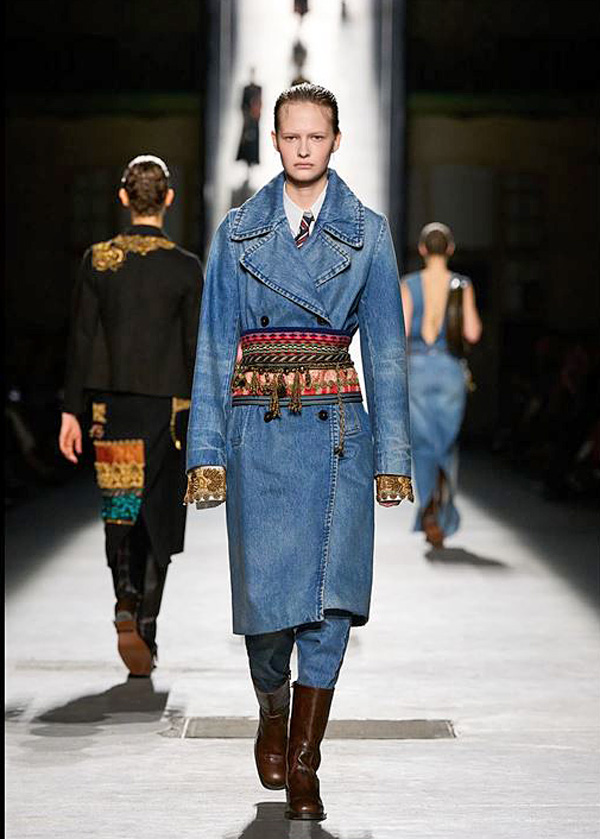
Dries Van Noten Fall 2026 Ready-to-Wear, photo by Daniele Oberrauch for gorunway.com
Since taking the design helm in 2025, Julian Klausner has maintained the brand’s heritage of meticulous embroidery and bold color palettes while modernizing the aesthetic.
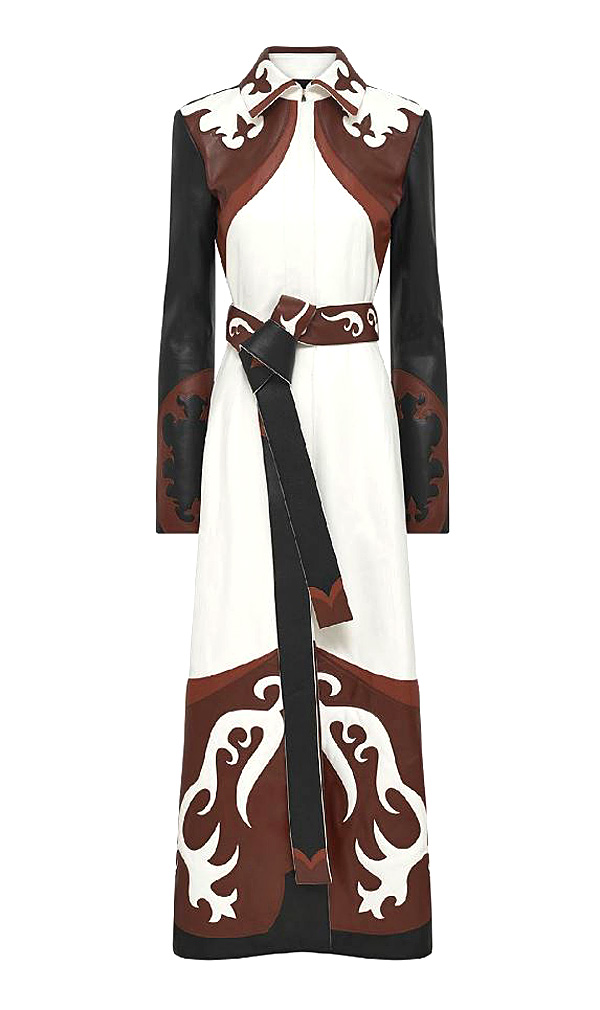
Gabriela Hearst Jemme color block leather coat, gabrielahearst
Gabriela Hearst frequently incorporates ethnic and cultural touches into her collections. Drawing deeply on her Uruguayan heritage, her designs regularly feature Latin American-inspired elements, Andean craftsmanship, and indigenous motifs.
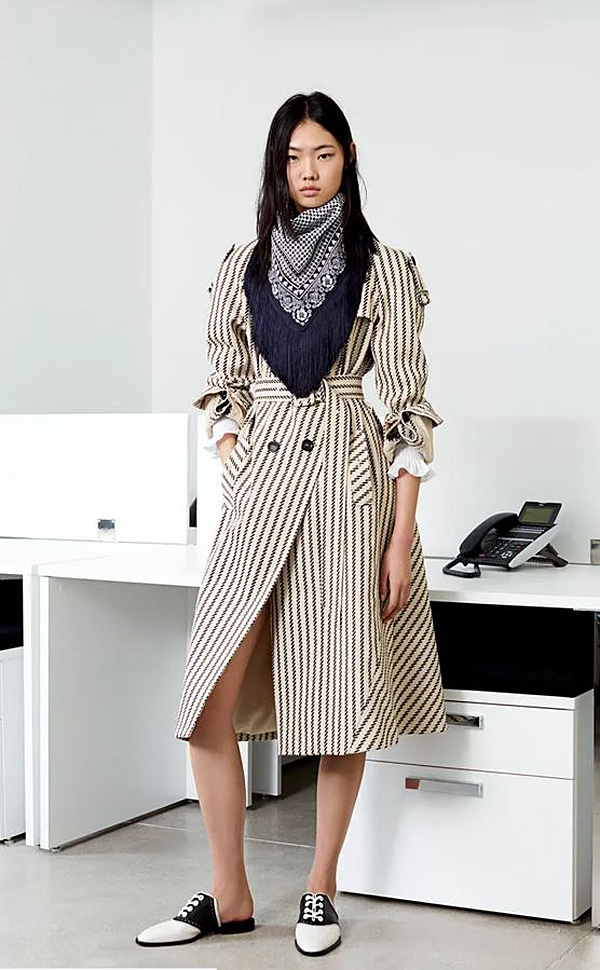
Altuzarra Resort 2018 Photo courtesy of Altuzarra
Raised in Paris to a Chinese-American mother and a French-Basque father, Joseph Altuzarra’s design vocabulary is heavily influenced by this multicultural upbringing. Altuzarra extensively incorporates cross-cultural mixes into his work, often blending the traditional structured artisanal history of French fashion with the pragmatism and effortless ease of American sportswear.
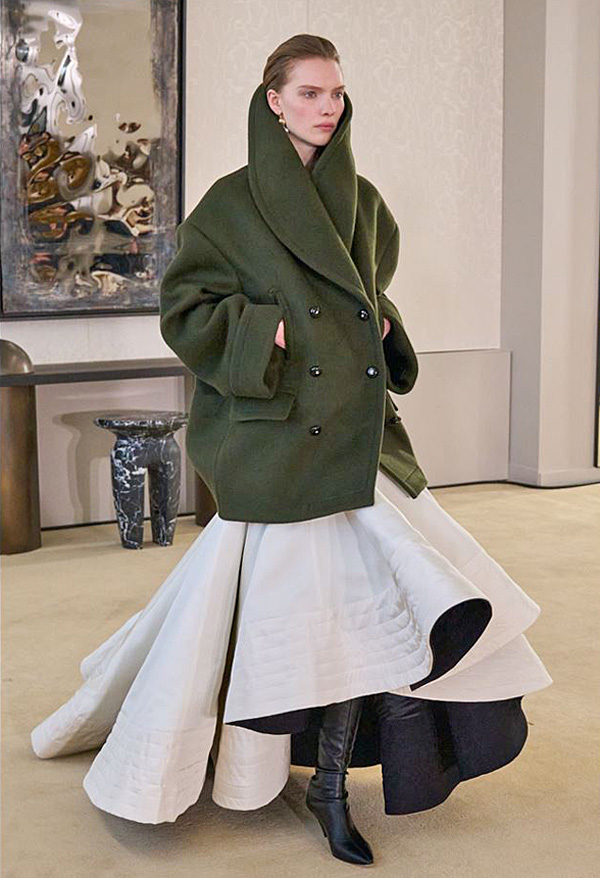
Altuzarra Fall 2026 Ready-to-Wear, Photo by Isadore Montag courtesy of Altuzarra
For fall 2026, Altuzarra channels a charged Spanish sensibility through a wardrobe built on tension, emotion, and precision, looking at the stark realism of Diego Velázquez and the heightened cinematic intensity of Pedro Almodóvar.
Look for Spain to be a growing fashion influence in 2026, driven by major global conglomerates, high-profile cultural runway shows, and a massive surge in sports-marketing visibility thanks in large part to Spain becoming the first-ever nation to hold the men’s and women’s World Cup titles simultaneously.
Ole!
