
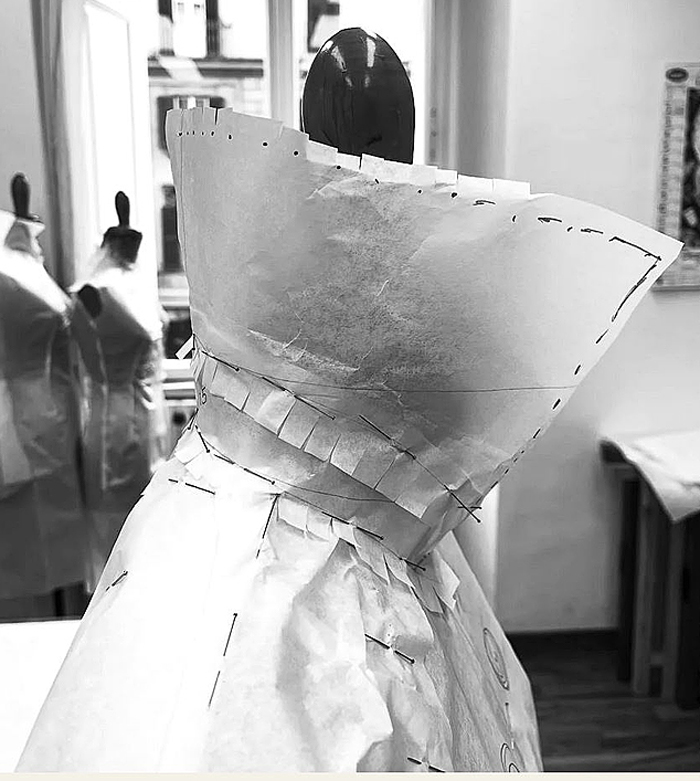
A pattern drawn by hand on the mannequin at giardinaatelier.com
A designer can draw a beautiful, avant-garde sketch, but a patternmaker translates that 2D sketch into a 3D, wearable garment. While social media and fast-fashion culture have hyper-glamorized the visual idea of clothing, patternmaking is the architectural blueprint that dictates how fabric actually behaves, moves, and hangs on a human body.
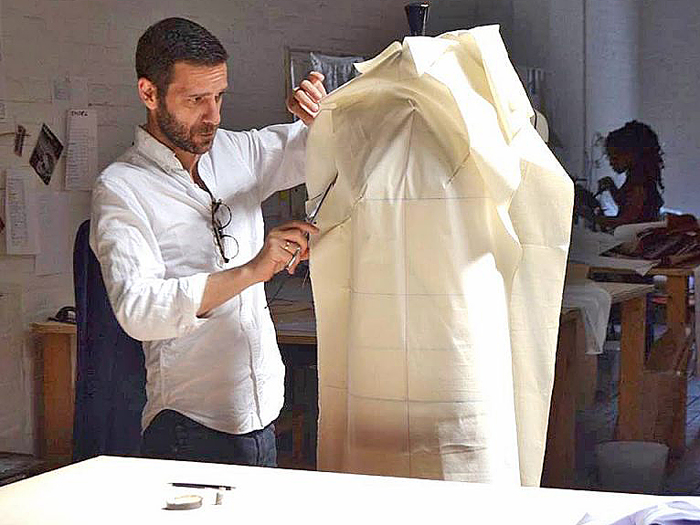
Nicolas Caito at work, nicolascaitoatelier.com
Patternmakers are the functional architects of fashion. Without them, fashion remains nothing more than a drawing on paper. Yet, the industry has largely swept the decline of this vital skill under the rug. The fashion industry loves to promote glamour and fast design cycles, but it systematically ignores a massive bottleneck: the people who know how to engineer clothes are rapidly disappearing.
As this hands-on technical skill declines, it reshapes the economics, quality, and identity of the entire American fashion landscape. Understanding the “dying art” of patternmaking is the single most important key to understanding American fashion today.
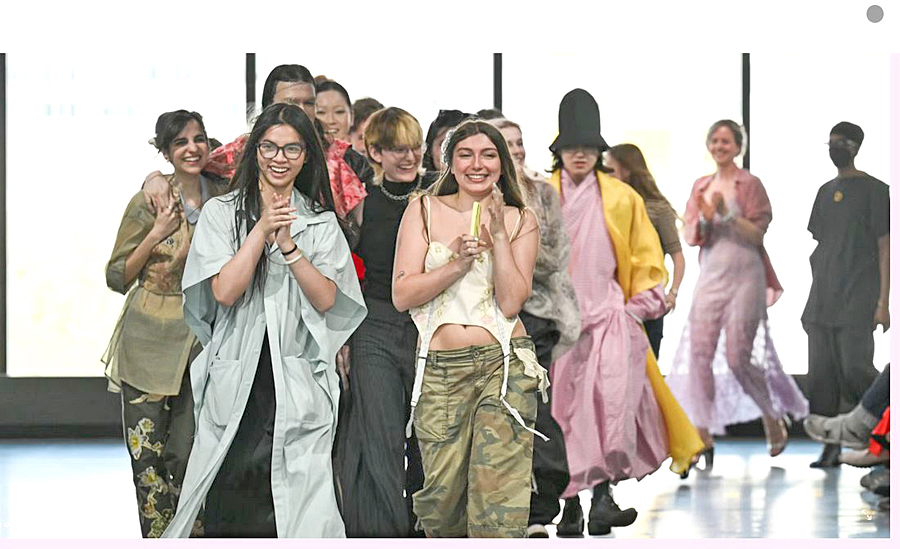
Parsons 2026 BFA Design Students share the runway, photo courtesy of Parsons
Young designers leave fashion school focused on the “glamour” of sketching, lacking the technical grasp of garment construction, grainlines, and draping needed to lead production. As a result, companies can spend months trying to fill open patternmaking roles.
“I have always felt that we lost something much greater than a collection of (patternmaking) jobs. We lost access to knowledge that took decades to develop. You cannot replace 40 years of experience simply by buying software.” – Todd Wayne, prominent industry recruiter and CEO of Jessilyn Personnel, Inc.

Todd Wayne
The fashion recruitment landscape reveals a harsh reality: traditional, master-tailored patternmaking is a dying art form. Nobody knows this better than Todd Wayne, the prominent fashion industry recruiter and CEO of Jessilyn Personnel, an apparel and fashion executive search firm in New York City that places full-time and freelance candidates across the fashion and retail industries worldwide. Ralph Rucci, who introduced me to Todd, understands the importance of expert patternmaking better than anyone.
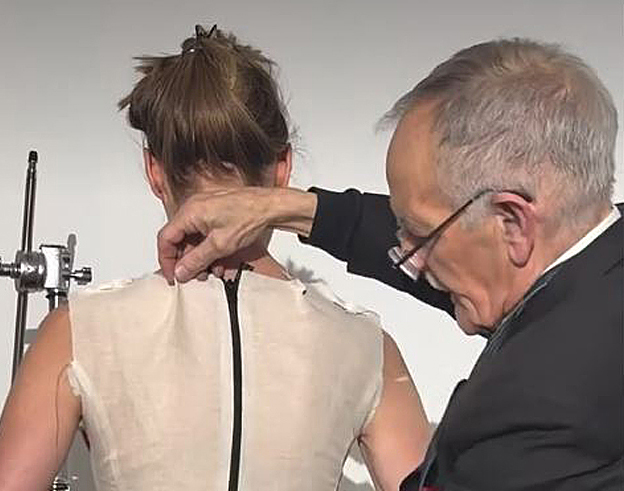
80-year-old Italian-born patternmaker Franco; photo by Instagram
Todd’s treatise, “The Dying Art of Patternmaking: 39 Years on the Front Lines of New York’s Fashion Industry”, addresses his deep concern that we are losing one of the most important foundations of American fashion. Todd did not write this article for publicity, but as a recruiter trying to fill real positions today, which is becoming harder and harder. Interestingly, he received the most responses from patternmakers, some of whom became so emotional about the beloved lifelong careers that they cried.
Drawing on nearly four decades of recruiting experience and a background running a domestic apparel manufacturing plant, Wayne approaches the patternmaking shortage through targeted workforce placement and localized, hands-on mentorship.
Todd laments that for decades, the fashion industry treated patternmaking as a background trade rather than an art. As a result, few young professionals are ready to take up the mantle. In New York’s Garment District, specialty suppliers are shutting down because no one is left to inherit the technical skills.
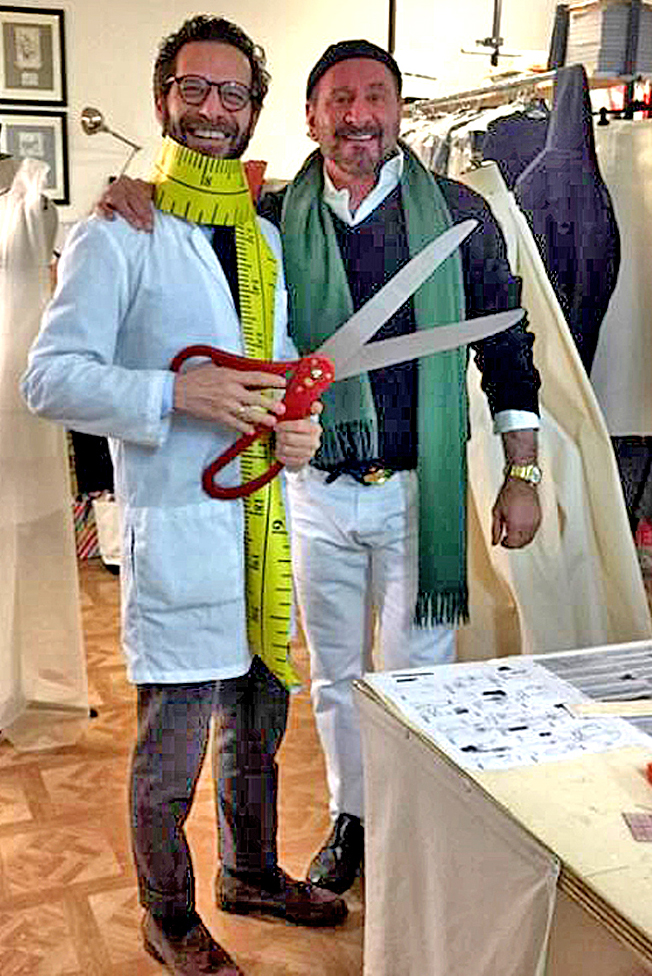
Nicolas Caito and Ralph Rucci, 2020, Instagram
Among the top, most in-demand patternmakers in NY are Mr. Marco Tudela and French-born Nicolas Caito, whose atelier is based in the Garment Center. Nicolas was the subject of an article I wrote in 2020, “Nicolas Caito: New York Fashion’s Most Essential Worker”.
Todd observes that fashion schools are no longer teaching traditional patternmaking the way they once did. Everything is virtual today. You have people in human resources who have no skills in the fashion industry, yet they are the ones making decisions on which resumes you’re going to review or not.
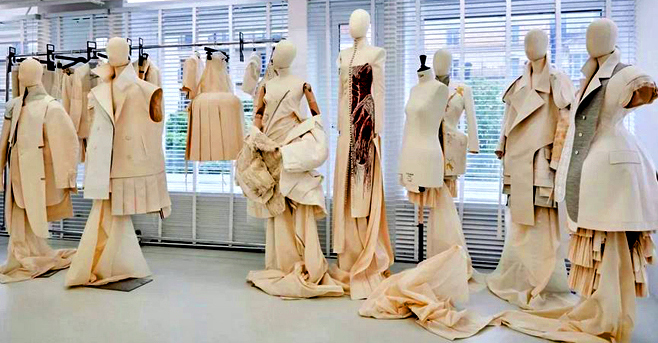
A great pattern is always behind every great design. – photo Thom Browne
While the luxury industry still employs some traditional table patternmakers, many of the remaining teams are small. A top-tier designer might have only two to four traditional patternmakers supporting the collection; a far cry from what the number was decades ago. Many companies have lost the large sample rooms that once supported entire organizations. More development happens overseas, and more communication happens electronically.
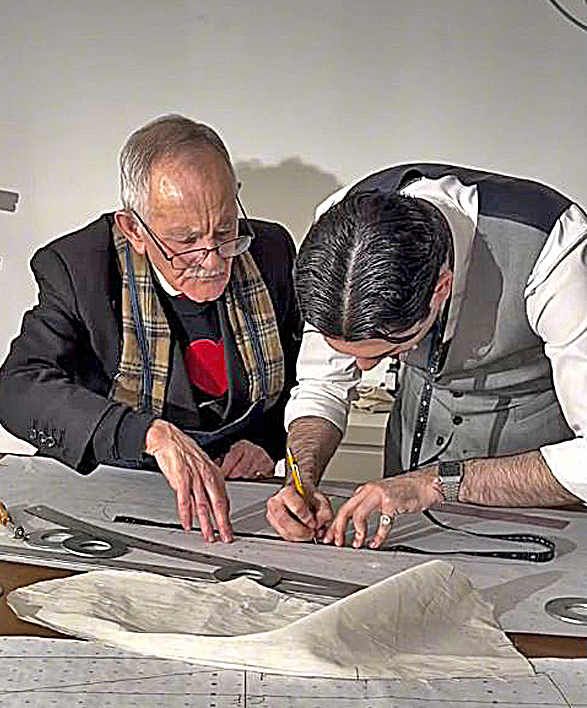
80-year-old Franco teaching pattern making in NYC, Instagram
A core tenet of Todd’s approach is bridging the generational gap in New York’s Fashion District. He coordinates placements that let newer tech talent work directly alongside some of New York City’s finest, most experienced patternmakers, transferring decades of institutional garment-construction knowledge before the senior generation retires.
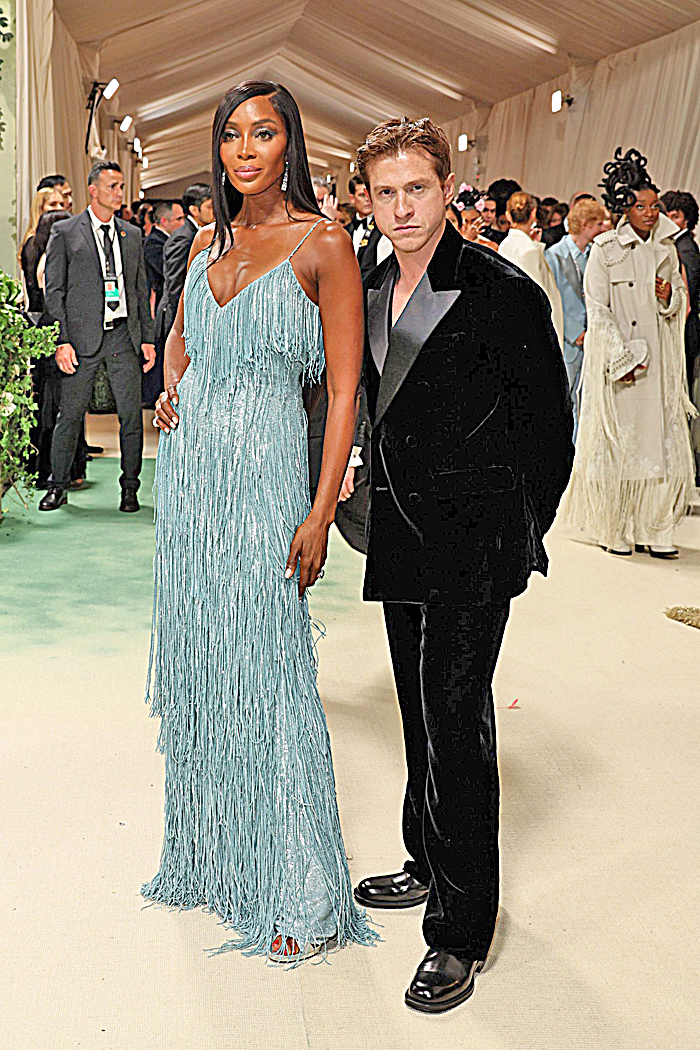
Naomi Campbell wearing Burberry and Daniel Lee at the Met 2024 Gala, rain-mag.com
FYI, Decades ago, in the late 70s and 80s, Todd put Ralph Lauren and Donna Karan’s entire sample rooms together and has worked with everyone from Calvin Klein, Bill Blass, Pauline Trigere, Carolina Herrera, Oscar de la Renta, and Geoffrey Beene, to Liz Claiborne and major companies abroad. He also worked on previous Met Galas, with Burberry, a sponsor.
Wayne partners explicitly with luxury fashion brands and contemporary menswear/womenswear designers willing to take on junior professionals. Because many younger fashion graduates have theoretical knowledge but lack master-level technical skills, his strategy relies on securing commitments from established design houses to train newer patternmakers in advanced tailoring and computer-aided design (like the Gerber PDS system)
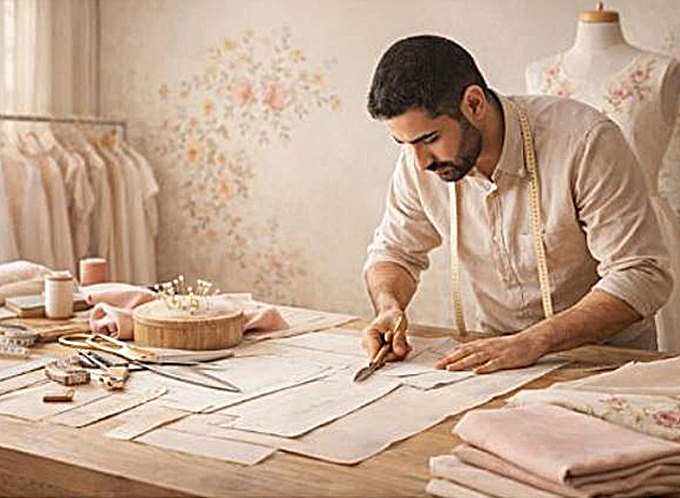
Patternmaking, Instagram
Wayne continuously advocates that fashion brands stop separating initial “creative” pattern design from production patternmaking. To prevent errors that cause massive resource and time losses overseas, he promotes keeping highly skilled “first-through-production” patternmakers embedded directly inside New York design rooms to collaborate seamlessly with design and sample room teams.
Wayne strongly believes that fashion schools must restore a strong foundation in hands-on patternmaking. Companies must rebuild the apprenticeship model. Because master patternmakers are an aging workforce, high-end brands must actively train the right candidates in specialized tailoring techniques. Todd views on-the-job mentorship alongside veteran New York artisans as crucial to keeping the foundational craft alive.
The bottom line: “AI is an amazing tool, but for creativity, the human brain is a better product to have.”
